Jammu and Kashmir Assembly’s Historic Stand: Resolution Against Article 370 Abrogation Sparkles Intense Debate

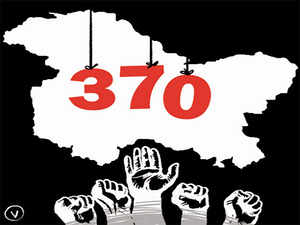
The Jammu and Kashmir Assembly witnessed a dramatic turn of events on November 4, 2024, during its first session in over six years. In a highly contentious move, People’s Democratic Party (PDP) MLA Waheed Para introduced a resolution opposing the abrogation of Article 370, which had granted special autonomy to the region. The resolution calls for the restoration of the state’s special status, sparking intense debates and a chaotic scene in the assembly.
Main Points
- 1 The Resolution That Stirred the House
- 2 BJP’s Fiery Opposition and Chaotic Scenes
- 3 Omar Abdullah’s Response and Political Underpinnings
- 4 The BJP’s Strong Stance: A Political Tug-of-War
- 5 A Divided House: Jammu and Kashmir’s Political Landscape
- 6 The Role of Lieutenant Governor Manoj Sinha
- 7 Reactions from National Political Leaders
- 8 The Way Forward: Political Negotiations and Public Sentiment
The Resolution That Stirred the House
Waheed Para, who represents Pulwama, a district long associated with the turbulence of Jammu and Kashmir, submitted the resolution to the newly-elected Speaker Abdul Rahim Rather. In his statement, Para emphasized that the resolution reflected the widespread sentiment among the people of Jammu and Kashmir, urging the assembly to challenge the August 5, 2019, revocation of Article 370. The article had been a cornerstone of the region’s special status, giving it considerable autonomy, including its own constitution and the ability to make laws on various internal matters.
Despite not being a part of the officially set agenda for the day, Para argued that the issue was critical enough to warrant immediate discussion, invoking the Speaker’s authority to allow for its inclusion. The resolution was framed not only as a legal challenge but as a symbolic act of defiance against the central government’s controversial decision to reorganize Jammu and Kashmir into a Union Territory.
BJP’s Fiery Opposition and Chaotic Scenes
The resolution immediately drew opposition from the BJP, which holds a strong political base in Jammu and Kashmir. All 28 BJP members stood in protest, demanding the suspension of Para for what they claimed was a breach of the assembly’s rules. BJP MLA Sham Lal Sharma called for action against the PDP lawmaker, accusing him of violating established norms by introducing the resolution without prior consultation. The speaker’s attempts to maintain order and calm the agitated members were unsuccessful, leading to noisy scenes and even a brief moment when an NC MLA, Shabir Kullay, rushed into the well of the House in the heat of the moment.
While the BJP vocally opposed the motion, accusing it of being politically motivated, members of the National Conference (NC) and other opposition parties supported the resolution, arguing that the sentiments of the people of Jammu and Kashmir needed to be heard. NC’s Chief Minister Omar Abdullah took the opportunity to dismiss the importance of the resolution, calling it a publicity stunt. In a statement, Abdullah emphasized that such resolutions were ineffective if they were not backed by a consensus across the assembly, and that the real political battle would unfold in future discussions.
Omar Abdullah’s Response and Political Underpinnings
Chief Minister Omar Abdullah, in his address to the assembly, suggested that while he understood the opposition’s concerns, such individual resolutions were of little value in the current political context. He pointed out that had the people of Jammu and Kashmir truly opposed the decision taken on August 5, 2019, the results of subsequent elections would have reflected this discontent. Abdullah stressed that the fate of Jammu and Kashmir’s special status should not be decided by any one MLA or party but would be dealt with through a broader, more inclusive political dialogue in the days to come.
Furthermore, Omar Abdullah made it clear that his government’s stance was focused on restoring full statehood to Jammu and Kashmir, although he stopped short of directly addressing the potential for restoring Article 370 itself. This distinction underscored the nuanced political situation in Jammu and Kashmir, where the debate around autonomy is deeply tied to the region’s political aspirations and historical grievances.
The BJP’s Strong Stance: A Political Tug-of-War
The BJP’s firm stance on opposing the resolution revealed the deep ideological divide within the assembly. While BJP members expressed their displeasure with the PDP’s resolution, claiming it was out of step with the aspirations of the people in Jammu, the party also noted that the removal of Article 370 was a necessary step toward greater integration of Jammu and Kashmir with the rest of India.
The BJP has long advocated for the full integration of Jammu and Kashmir, a stance that is reflected in its position on the abrogation of Article 370. The party’s legislative efforts in the region since 2019 have focused on revoking the special status of Jammu and Kashmir, arguing that it would lead to greater development, stability, and security in the region. However, this line of thinking remains highly controversial, with many residents of Jammu and Kashmir viewing the revocation as an infringement on their unique identity and autonomy.
A Divided House: Jammu and Kashmir’s Political Landscape
As tensions continued to escalate within the assembly, it became clear that the political landscape in Jammu and Kashmir remains divided. On one side, the opposition parties, including the PDP, National Conference, and other regional players, continue to push for the restoration of Jammu and Kashmir’s special status. On the other hand, the ruling government and BJP maintain that the region must move forward as a Union Territory, with a focus on governance and development rather than autonomy.
This ideological divide reflects a broader national debate on the future of Jammu and Kashmir, which has become one of the most contentious political issues in India. The central government’s decision to revoke Article 370 remains a point of contention, with critics arguing that it undermines the region’s political and cultural identity. Proponents, however, view it as a necessary step toward integrating Jammu and Kashmir more fully into the Indian Union.
The Role of Lieutenant Governor Manoj Sinha
Lieutenant Governor Manoj Sinha also weighed in on the issue, asserting that the administration under his leadership would work toward the restoration of full statehood for Jammu and Kashmir. This promise was seen as a move to address growing concerns among the local population, who fear that the loss of special status could lead to a loss of identity and rights. The Lieutenant Governor emphasized the importance of maintaining trust in democratic institutions and vowed that the administration would continue to strive for greater autonomy within the framework of the Indian Constitution.
While the calls for the restoration of Article 370 persist, Sinha’s government has made significant strides in addressing other issues, such as improving infrastructure, boosting tourism, and fostering economic growth in the region.
Reactions from National Political Leaders
National political figures also weighed in on the issue, with leaders from various political parties offering divergent views. PDP chief Mehbooba Mufti publicly expressed pride in Waheed Para’s decision to bring the resolution forward, framing it as a symbolic stand for the people of Jammu and Kashmir. Mufti’s remarks underscore the continuing political rift between parties like the PDP and BJP, which has widened since the revocation of Article 370.
On the other hand, BJP leaders have reiterated their commitment to the 2019 decision, calling it a turning point in the region’s history that will ultimately bring peace and prosperity to Jammu and Kashmir.
The Way Forward: Political Negotiations and Public Sentiment
The passing of this resolution in the Jammu and Kashmir Assembly marks a new chapter in the ongoing struggle over Article 370. While the immediate political impact of this resolution remains unclear, it highlights the deep divisions within the state over its future status. The next few days and weeks will likely see further political maneuvering and discussions within the assembly, with the national government keenly watching how these events unfold.
In the coming months, the future of Jammu and Kashmir will continue to be shaped by political negotiations, legal battles, and public sentiment. Whether Article 370 can ever be restored remains to be seen, but the recent resolution has undoubtedly reignited the debate over the region’s political autonomy.
This historic session in Jammu and Kashmir’s legislative assembly marks a crucial moment in the ongoing evolution of the region’s governance and its place within India’s democratic framework. As the situation develops, it is clear that the debate over Jammu and Kashmir’s special status will continue to be a defining issue for both local and national politics.